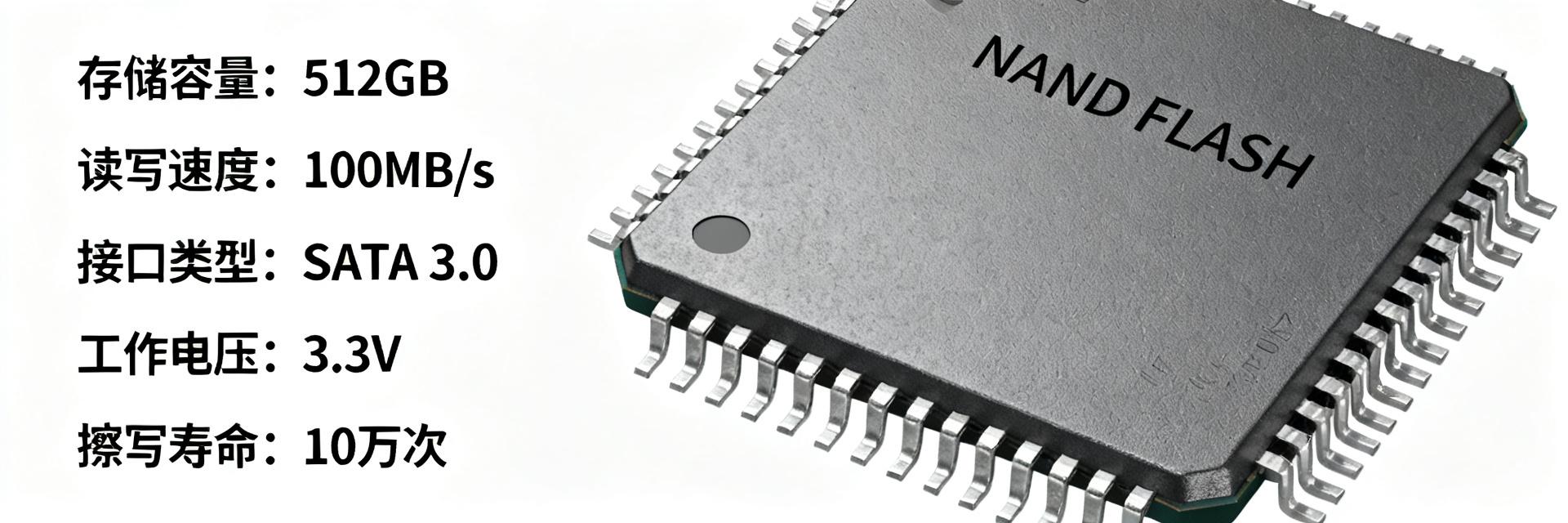
2025 Industrial-grade SDHC Card Buying Guide: 5 Key Indicators Determine the Success or Failure of Your Project

In industrial automation and edge computing, a robust memory card is the foundation of system operation.

Data Warning: Data shows that system failures caused by substandard storage media account for up to 15% of industrial equipment failure causes. In industrial automation and intelligent transportation projects, a single data loss can result in economic losses of hundreds of thousands. This article will reveal the core purchasing indicators that determine the success or failure of a project.

The Essential Difference Between Industrial Grade and Consumer Grade: Why the Multiple Price Gap?

Comparison between Industrial Grade SDHC Card and Consumer Grade

The core difference between industrial-grade SDHC cards and consumer-grade products lies in the fundamental difference in design philosophy. Consumer-grade products pursue "usability" and cost-effectiveness, while industrial-grade products are committed to achieving the ultimate in "reliability" and "durability".

Comparison Item Consumer Grade Industrial Grade
Operating Temperature 0°C to 70°C -40°C to 85°C (Wide Temp)
P/E Cycles Approx. 500 - 3,000 times 3,000 - 100,000+ times
Data Integrity Basic Error Correction Strong ECC + Power Loss Protection
Physical Ruggedness Standard Housing Vibration resistant, shock resistant, thick gold fingers

Extreme Temperature Range and Operating Stability

Temperature is the primary environmental factor affecting the performance and lifespan of electronic components. Industrial sites may face extreme cold outdoor environments or high temperature accumulation inside equipment.

Interpreting the Wide Temperature Specification: The Practical Meaning of -40°C to 85°C

"-40°C to 85°C" requires complete data read and write operations across the entire temperature range. This ensures that data access will not fail when the equipment starts in cold winters or runs at full load in high summer temperatures.

Temperature Cycling Test: Avoiding Data Crashes Under Alternating Cold and Heat

Qualified industrial-grade cards must pass rigorous high and low temperature cycling tests. This verifies the connection reliability of the memory card controller, flash memory particles, and PCB under repeated temperature shocks, preventing material fatigue.

Lifespan (P/E Cycles) and Wear Leveling

Visual Comparison of Flash Memory Particle Program/Erase Life (P/E Cycles)

SLC (Top Tier)100,000
pSLC (Industrial Mainstream)30,000
MLC (Standard Grade)3,000
TLC (Consumer Grade)500 - 1,000

Industrial applications often involve 7x24 hours of uninterrupted data recording. pSLC mode drives TLC/MLC particles in SLC mode, sacrificing capacity for several times the lifespan, making it a current cost-effective choice.

TBW (Total Bytes Written): This is the key to quantifying lifespan. Based on the average daily write volume of the project, the expected service years can be estimated.

Data Integrity Assurance and Error Correction

ECC Error Correction and Bad Block Management

Equipped with a more powerful ECC engine, it monitors block health in real-time, migrates data in advance, and prevents data unreadability caused by bad block accumulation.

Power Loss Protection Function

Using on-board capacitors or firmware mechanisms to ensure that ongoing write operations are safely completed at the moment power loss is detected, avoiding file system crashes.

Sustained Performance and Consistency

Industrial scenarios (such as video surveillance) require stable, sustainable performance, rather than instantaneous burst speeds.

  • Beware of "Burst Speed": Focus on the "sustained write speed" indicator provided by the manufacturer.
  • Performance Consistency: Avoid production line stagnation caused by lag, ensuring response latency is within a minimal range.

Physical Ruggedness and Interface Reliability

In dynamic environments, the reliability of physical connections is crucial:

🛡️

Vibration and Shock Resistance

Complies with MIL-STD standards for vehicle and robotic arm environments.

Thickened Gold Plating Process

Prevents moisture and oxidation, supporting over 10,000 insertions and removals.

Key Summary

Harsh Environment Adaptability The core value lies in wide temperature operating capability (-40°C to 85°C) and strong physical protection.
Ultra-long Lifespan and Data Security Guarantees data integrity through pSLC particles, high TBW indicators, and power loss protection.
Performance Stability Focuses on the consistency of sustained read and write speeds to avoid obstruction of system continuity.

Frequently Asked Questions (FAQ)

Industrial-grade SDHC cards are so much more expensive than consumer-grade cards, is it worth the investment? +
Absolutely worth it. Its value lies not in storage space, but in "risk avoidance". The cost of a single downtime, data loss, or repair caused by a memory card failure far exceeds the price difference of the card itself. It reduces the total cost of ownership over the system's life cycle.
How to verify if an SDHC card truly meets industrial-grade standards? +
First, require the supplier to provide a detailed technical white paper. Second, prioritize well-known industrial storage brands that can provide long-term supply guarantees. Finally, conduct small-batch sampling at the beginning of the project and perform stress tests in simulated harsh environments.
When purchasing memory cards for my industrial project, which indicator should I prioritize most? +
Prioritize the "short-board indicator" related to your specific scenario. For example: focus on wide temperature for outdoor equipment, TBW lifespan for 7x24 hour recording, and power loss protection for medical/financial equipment.
Top